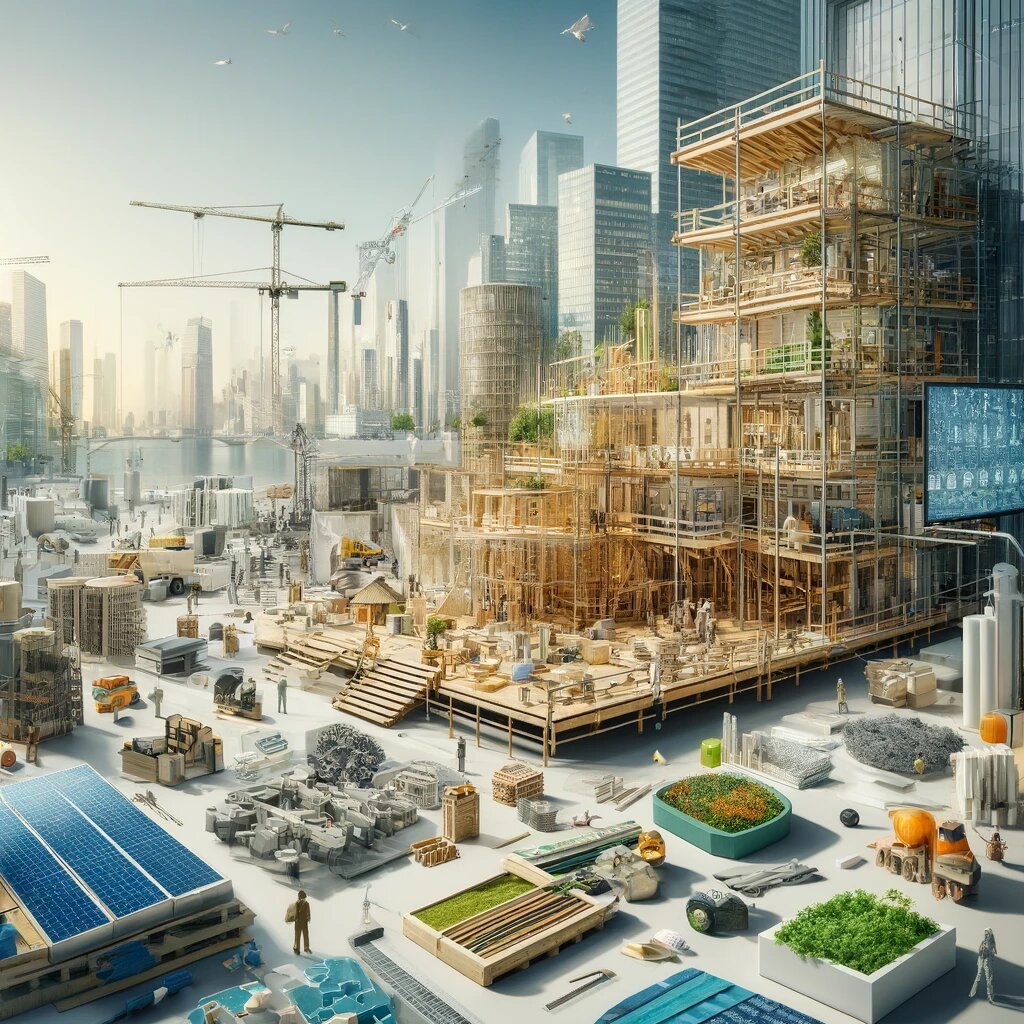
The hum of construction, the rise of new structures – it’s an exciting dance of innovation and progress. Yet, behind the scenes, our built environment carries a heavy footprint. Construction and the ongoing use of buildings are staggering, contributing roughly 40% of the world's carbon emissions. But what if there was a better way? What if every brick laid, every beam hoisted, every panel installed contributed to a healthier planet and a healthier you? That’s the promise of Sustainable Building Materials & Design. It's not just a trend; it's the future of how we live, work, and build.
This isn't about sacrificing style or comfort for sustainability. It's about smart choices that deliver homes and buildings that are more efficient, more durable, and intrinsically better for everyone involved. Think of materials that clean the air, sequester carbon, and last for generations—all while looking fantastic.
At a Glance: Your Quick Guide to Sustainable Building
- The Big Impact: Construction and buildings are major carbon emitters; sustainable choices drastically reduce this footprint.
- Beyond Greenwashing: Truly sustainable materials have low "embodied carbon" (energy used to produce them), are energy-efficient, and come from renewable or recycled sources.
- Wins for Everyone: These materials save you money long-term, create healthier indoor environments, and protect the planet for future generations.
- Diverse Options: From engineered wood to earth-based bricks and recycled plastics, there's a sustainable solution for almost every part of a building.
- Holistic Approach: Sustainability isn't just about materials; it's also about smart design, energy efficiency, and waste reduction.
- It's an Investment: While some upfront costs might be higher, the long-term benefits in durability, energy savings, and health far outweigh them.
Why Building Green Isn't Just Good, It's Essential
For too long, the default in construction has been "cheap and fast," often at the expense of our environment and long-term well-being. But the tide is turning. We're waking up to the critical importance of considering a material's entire lifecycle—from where it comes from and how it's made, to its performance in your home, and eventually, how it's disposed of or repurposed.
Sustainable building materials are champions of this lifecycle thinking. They’re selected not just for their immediate function, but for their minimal negative environmental impact at every stage. This often means they’re derived from natural, rapidly renewable resources, contain high levels of recycled content, or require significantly less energy to produce and transport. The payoff is immense: we reduce strain on natural resources, slash carbon emissions, minimize landfill waste, and create structures that actively promote occupant health through superior air quality and temperature regulation.
The Pillars of Sustainable Design: More Than Just Materials
While exceptional materials are at the heart of green building, true sustainability comes from a holistic design approach. It's about understanding how every element works together, from the orientation of your home on its site to the way air circulates indoors.
Mastering Passive Design
This principle leverages natural forces to heat, cool, and light your home. Think carefully placed windows for optimal daylighting and solar gain in winter, strategic shading to block summer sun, and natural ventilation paths to keep air fresh and cool. A well-designed passive home dramatically reduces the need for artificial heating and cooling, slashing energy bills and emissions without relying on complex, expensive technologies.
Smart Water Management
Beyond efficient fixtures, sustainable design considers how water enters, exits, and is used on your property. This can include rainwater harvesting for irrigation or toilet flushing, greywater recycling systems, and drought-tolerant landscaping. Every drop saved is energy saved, too, as less water needs to be treated and transported.
Waste Not, Want Not: Construction & Demolition
A shocking amount of waste comes from construction sites. Sustainable design prioritizes waste reduction through prefabrication, precise ordering, and active recycling programs for discarded materials. At the end of a building's life, the goal is to dismantle and reuse, rather than demolish and dump.
Your Green Building Material Playbook: From Foundation to Finish
Let's dive into the fascinating world of materials that are redefining construction. We'll explore what makes each one a sustainable hero, where you can use them, and what to consider before integrating them into your project.
Structural Game-Changers: Building Strong and Smart
These materials form the backbone of your home, offering innovative ways to create resilient, energy-efficient structures with a lighter environmental touch.
Mass Timber: The Wood That Thinks Big
Imagine wood that rivals the strength of steel and concrete, but with a fraction of the carbon footprint. That's mass timber. It's engineered by binding multiple layers of wood planks, creating incredibly strong panels, beams, and posts. Categories like Cross-Laminated Timber (CLT) and Glued Laminated Timber (Glulam) are leading the charge.
Why it's Green: Trees sequester carbon as they grow, and mass timber keeps that carbon locked away in buildings for decades. Its pre-cut and pre-manufactured nature offsite drastically reduces construction waste and transport emissions.
Where it Shines: Load-bearing structural elements for large-scale and residential buildings alike.
The Upside: Significant carbon sequestration, much faster construction times (up to 75% less than concrete/steel), and excellent durability (50-100 year lifespan with good seismic performance).
Consider This: It can be susceptible to water damage during construction, and upfront costs can be higher than traditional materials.
Structural Insulated Panels (SIPs): The Prefab Powerhouse
Think of a high-performance sandwich: a thick insulated core (like polyurethane foam or natural fiber) squashed between two sheathing panels, typically Oriented Strand Board (OSB). These are SIPs.
Why it's Green: The OSB often comes from fast-growing, new trees, capturing carbon. But the real win is SIPs' incredible energy efficiency. Their airtight construction minimizes thermal bridging and air leakage, drastically improving a structure’s overall energy performance and indoor air quality.
Where it Shines: Walls, roofs, floors, and even foundation systems for residential and light commercial projects.
The Upside: Rapid construction, exceptional strength (2.5 times stronger than traditional stick-framing, great for wind and earthquake resistance), and superior indoor air quality due to airtightness.
Consider This: Higher upfront costs, and once fabricated, they’re difficult to modify on site.
Precast Concrete Slabs: Consistency with a Conscience
Precast concrete isn't new, but its sustainable advantages are gaining traction. These are concrete slabs and panels that are poured and cured in a controlled factory setting, then shipped to your site.
Why it's Green: Factory production means less waste, less water usage compared to on-site pouring, and a controlled environment reduces soil and water contamination. Many manufacturers now incorporate recycled materials into their mixes.
Where it Shines: Foundations, walls, bridges, and even entire building structures.
The Upside: Impeccable, consistent quality, incredible durability (50-100 year lifespan, highly resistant to elements and disasters), and very low maintenance.
Consider This: They are heavy, increasing shipping emissions, difficult to alter once cast, and require specialized equipment (cranes) for installation, adding to costs.
Adobe Brick: Earth's Ancient Insulator
Adobe, a composite of sand, clay, silt, water, and organic binders (like straw), pressed into bricks and sun-dried, is one of humanity’s oldest building materials.
Why it's Green: Made from local, non-toxic earth, adobe generates little to no carbon emissions during production (no kiln firing!). It lasts for millennia and inherently reduces energy needs for heating and cooling.
Where it Shines: Load-bearing walls and flat roofs, often finished with plaster or stucco for protection. Ideal for dry, warm climates.
The Upside: Exceptional energy efficiency due to high thermal mass, maintaining stable indoor temperatures. It’s incredibly durable (thousands of years!) and naturally fire-resistant.
Consider This: Very heavy, slowing construction and often requiring a concrete foundation. Not suited for wet or freezing climates without significant protection, and requires regular maintenance (recoating plaster every few years).
Earth Bags: Low-Impact, High Resilience
Earth bags are exactly what they sound like: bags (often plastic sacks) filled with local soil, sometimes mixed with gravel or crushed volcanic rock. These are then stacked and plastered.
Why it's Green: Uses "zero-mile" material, meaning soil sourced directly from or very near the building site. It requires minimal energy to produce, lasts for hundreds of years, and is inherently recyclable.
Where it Shines: Ideal for straight or curved walls, often used for domed roofs in small-scale construction.
The Upside: Extremely inexpensive, highly durable against severe weather and earthquakes, and emits very low carbon due to minimal energy expenditure in production.
Consider This: Very labor-intensive, requiring significant manual effort. Best for smaller projects, and extreme wetness can cause structural deterioration.
Walls & Envelopes: Shielding Your Home Sustainably
These materials focus on creating effective building envelopes that protect, insulate, and contribute to the aesthetic of your home, all while being eco-conscious.
Hempcrete: The Carbon-Negative Wonder
Hempcrete is a unique composite: hemp hurds mixed with lime, pozzolans, or sand. It's not load-bearing but provides exceptional thermal performance.
Why it's Green: Hemp is a rapidly renewable crop (3-4 month harvest cycle) that absorbs and stores a vast amount of carbon during growth. When processed into hempcrete, that carbon is locked away, making it a carbon-negative material.
Where it Shines: Non-load-bearing infill walls, insulation, or as a plaster on existing walls.
The Upside: Rapidly renewable, naturally mold-resistant (thanks to the lime), and offers excellent moisture control, absorbing excess humidity without compromising integrity (maintaining 40-60% indoor humidity).
Consider This: Requires a long drying time (6-8 weeks), cannot be used for structural support, and requires a learning curve for builders.
Timbercrete: Hybrid for Smart Walls
Timbercrete is a clever building block made by combining sawdust or wood chips with concrete. It's a new twist on a traditional material, leveraging waste products.
Why it's Green: It repurposes timber industry waste, reducing landfill burden, and uses locally available concrete components. The sawdust sequesters carbon, preventing its release if the wood were to decompose or burn.
Where it Shines: Best for exterior walls where insulation is prioritized over load-bearing capacity. Also lighter than traditional concrete, making it suitable for roofing. Can be molded onsite or precast.
The Upside: Utilizes readily available waste components, offers high thermal capacity (improving energy efficiency), and traps carbon. It's fire-resistant like concrete but can be worked with tools like wood.
Consider This: Low load-bearing capacity limits its use for structural support. Requires precise mixing, and construction guides/experts are still relatively limited.
Straw Bales: Agricultural Abundance for Building
Straw bales are tightly compressed bundles of dry stalks from cereal grains like rye, oats, wheat, or rice. They are an often-overlooked, yet incredibly effective, building material.
Why it's Green: Straw is an agricultural byproduct, widely available, requires minimal energy to process, and contains no toxins. It has a very low embodied energy.
Where it Shines: Can be used as structural components (stacked walls, plastered) or simply for insulation.
The Upside: Naturally fire-resistant due to tight compaction. Offers excellent insulation (high R-values of R-30 to R-35), contributing to superior acoustic and thermal control. It's also affordable and easy to produce.
Consider This: Can attract pests if not properly protected from moisture or if the grain content is too high. Highly susceptible to water damage (which promotes mold), requiring diligent external protection. Structural integrity relies heavily on proper construction and a suitable foundation.
Stone: Timeless Strength, Earth's Embrace
Natural stone—granite, sandstone, marble, basalt—is one of the oldest and most enduring building materials. It's available as raw stone, cut blocks, slabs, or panels.
Why it's Green: Readily available (especially when sourced locally), stone has incredibly low embodied energy once extracted, an extremely long life cycle, and releases no volatile organic compounds (VOCs).
Where it Shines: Floors, countertops, wall cladding, columns, and other structural or decorative elements.
The Upside: Extremely durable (strong, high load-bearing, resilient to elements), requires very low maintenance, and offers immense versatility, complementing diverse architectural styles.
Consider This: Can be very expensive, particularly high-quality or rare types. It's heavy, increasing transport emissions and requiring skilled masons for installation.
Insulation: Keeping Comfort In, Energy Bills Down
These materials are champions of thermal efficiency, preventing heat loss in winter and heat gain in summer, leading to significant energy savings and a more comfortable home.
Sheep's Wool: Nature's Breathable Blanket
Yes, the same wool that keeps sheep warm can insulate your home! It's a natural, renewable, and biodegradable fiber.
Why it's Green: Requires 90% less energy to produce than fiberglass. It's a natural air purifier, helping remove toxins like formaldehyde from indoor air, and its lanolin content makes it naturally flame-resistant.
Where it Shines: Insulation (a superb alternative to fiberglass), carpets, and furniture fabrics.
The Upside: Excellent sound absorption (reducing noise by up to 50%), fire-resistant (chars without full combustion), and humidity-resistant, meaning it absorbs moisture without losing its insulating R-value, helping prevent mold and rot.
Consider This: Generally more expensive than conventional insulation. It can be susceptible to insect damage (moths, carpet beetles), often requiring chemical treatments (e.g., borax) which can be a concern.
Natural Fiber Insulation: A Breath of Fresh Air
This category encompasses a range of organic compounds with inherent insulative properties, including hemp, cotton, wood fiber/cellulose, straw, and more wool.
Why it's Green: These materials are generally safer to handle and install (fewer irritants/chemicals) and boast a significantly lower carbon footprint with less waste. Many companies use low-energy manufacturing processes and incorporate recovered materials.
Where it Shines: Insulating walls, attics, and floors.
The Upside: Low- or zero-VOC content, contributing to improved indoor air quality. Many are naturally fire-resistant or treated with non-toxic borates. Highly effective at temperature regulation, drastically reducing heating and cooling needs.
Consider This: Can be more expensive than conventional options like fiberglass. Some natural fibers may have a slightly lower R-value per inch, potentially requiring thicker wall cavities.
Cork: The Carbon-Negative Bark
Cork is the remarkable bark of the cork oak tree, harvested without harming the tree itself. It's shredded, compressed, baked, and cut into planks or tiles.
Why it's Green: Bark is harvested every nine years, allowing the tree to continue growing and sequestering carbon. The harvesting process actually stimulates the tree to absorb up to five times more CO2, making cork a truly carbon-negative material. All products are compostable.
Where it Shines: Primarily flooring or insulation.
The Upside: High insulating capacity (excellent R-value), naturally antimicrobial (resistant to fungus, mold, mildew), and inherently fire-resistant (burns slowly without flame). It's soft underfoot and repels insects.
Consider This: Susceptible to UV damage (it can yellow or fade over time). Can be expensive due to skilled harvesting and annual processing. Highly responsive to humidity, which can lead to expansion, contraction, and gaps.
Plant-based Polyurethane Rigid Foam (PPRF): Green in a Can
This is a sustainable alternative to traditional rigid foam insulation, manufactured using renewable sources like hemp, kelp, bamboo, or vegetable oils.
Why it's Green: PPRF does not contain harmful chlorofluorocarbons (CFCs), which are potent greenhouse gases found in older foam types. Using bio-based oils results in safer products and significantly lower carbon emissions during extraction and manufacturing. Most products are compostable.
Where it Shines: Primarily for insulation, and also used in some furniture. Excellent for creating airtight seals in tight or irregular spaces.
The Upside: High thermal resistance (often a higher R-value than polystyrene or fiberglass), compostable, and has a lower carbon footprint.
Consider This: Can be significantly more expensive than conventional polyurethane foam, and local suppliers might be harder to find.
Surfaces & Finishes: Eco-Elegance from Floor to Ceiling
These materials bring sustainable beauty and performance to the visible parts of your home, offering stylish and responsible choices for floors, walls, and more.
Terrazzo: Artful Recycling Underfoot
Terrazzo is a composite material made from chipped marble, granite, or quartz, traditionally cast in a cementitious binder. Modern versions often use epoxy resin.
Why it's Green: Its core eco-friendly advantage is the reuse of stone refuse that would otherwise be waste. The aggregate is frequently sourced locally, further reducing shipping emissions.
Where it Shines: Elegant and durable wall and flooring treatments.
The Upside: Extremely easy to clean, highly customizable with a vast array of colors, designs, and aggregate types. It's incredibly long-lasting (often 75+ years, potentially 100).
Consider This: High upfront cost and requires difficult, precise installation by skilled artisans.
Recycled Rubber: Tough & Tranquil
Recycled rubber repurposes post-consumer waste, primarily old tires, diverting millions of tons of elastomers from landfills annually.
Why it's Green: It directly addresses the massive problem of rubber waste, preventing material that would take centuries to decompose from filling up landfills. Natural rubber decomposes, but recycling significantly extends its useful life.
Where it Shines: Flooring, wall panels, and ceiling treatments, prized for its elasticity, impact absorption, and comfort.
The Upside: Extremely durable with high tensile strength, resistant to tearing and wear. Offers excellent noise reduction (a fantastic acoustic dampener) and effective shock absorption, withstanding heavy impacts and providing seismic resistance.
Consider This: Potential higher upfront cost, especially for poured rubber flooring. Can be cumbersome and time-consuming to install.
Reclaimed Wood: A Second Life for Timeless Beauty
Reclaimed wood is timber salvaged from old barns, factories, warehouses, and other structures, given a new purpose.
Why it's Green: It dramatically reduces the demand for new timber, helping minimize deforestation. By reusing wood, we prevent it from ending up in landfills (where wood accounts for 8.3% of municipal waste) and keep its stored carbon out of the atmosphere. Old-growth reclaimed wood is often denser and more durable than newly harvested timber.
Where it Shines: Building frameworks, flooring, furniture, wall cladding, rafters, and fences. FSC-certified reclaimed wood can even contribute to LEED points.
The Upside: Reduces waste, offers a unique aesthetic with its aged look and character, and acts as a natural insulator due to its low thermal conductivity.
Consider This: Can be expensive due to the labor-intensive process of deconstruction, processing, and inspection. May contain chemicals or hidden pests, requiring careful verification and kiln-drying. Future pest attacks are still a possibility.
Bamboo: Nature's Fast-Growing Timber
Often mistaken for wood, bamboo is actually a rapidly renewable grass with incredible strength and versatility.
Why it's Green: It matures in 3-5 years compared to 20-50 for hardwoods. It absorbs twice the carbon dioxide of timber, requires less water, and needs no fertilizer. Its roots remain after harvest, preventing soil erosion. Plus, it's biodegradable.
Where it Shines: Bridges, huts, structural support systems, laminated planks for fences, flooring, and furniture. Stranded bamboo is particularly strong for flooring.
The Upside: High strength-to-weight ratio, excellent joint mobility (beneficial in earthquake-prone regions), and it composts in as little as six months at the end of its life.
Consider This: Susceptible to moisture damage and fungal rot. Attracts pests like termites and beetles, requiring treatments (e.g., boron). Significant shipping distances (primarily from Asia/South America) increase its carbon footprint, so consider the full lifecycle.
Recycled Plastic: Giving Waste a New Purpose
Millions of tons of plastic waste are produced annually, with a vast majority ending up in landfills. Recycled plastic offers a chance to repurpose this material into durable building components.
Why it's Green: It diverts existing plastic waste (like HDPE from milk jugs) from landfills, reducing pollution and the need for new plastic production, which is energy-intensive and relies on fossil fuels.
Where it Shines: Shingles, concrete additives, roadways, bricks/tiles, recycled-fiber carpets, decking, fencing, and siding.
The Upside: Extremely long-lasting, reducing maintenance and replacement cycles. Easily molded into various shapes and is naturally water- and pest-proof (no rot, no termites).
Consider This: A significant concern is the inevitable production of microplastics, which can leach harmful chemicals into the environment. It's susceptible to thermal expansion and contraction, and generally has low load-bearing capacity, making it unsuitable for structural columns or beams.
Making Smart Choices: Your Decision Criteria for Sustainable Building
With so many incredible options, how do you decide what's right for your project? Here are key factors to consider:
- Embodied Carbon & Energy: This is the total energy used to extract, process, manufacture, transport, install, and dispose of a material. Prioritize materials with lower embodied carbon. Locally sourced materials, for example, drastically cut transport emissions.
- Lifecycle Assessment: Look beyond upfront costs. How long will the material last? How much maintenance will it require? What happens at the end of its life? Materials that are durable, require little maintenance, and can be reused or recycled are long-term winners.
- Source & Renewability: Is the material from a rapidly renewable resource (like bamboo or hemp), recycled content, or sustainably harvested (like FSC-certified wood)? Avoid materials that deplete finite resources or damage ecosystems.
- Toxicity & Indoor Air Quality: Does the material off-gas harmful volatile organic compounds (VOCs)? Prioritize low- or zero-VOC materials to create a healthier indoor environment for occupants. Natural materials like stone, adobe, and wool are excellent in this regard.
- Performance & Durability: A sustainable material isn't truly sustainable if it doesn't perform well or needs frequent replacement. Look for materials that offer high R-values for insulation, strength for structure, and resistance to pests, mold, and weather.
- Cost (Upfront vs. Lifetime): Sustainable materials can sometimes have higher upfront costs. However, factor in long-term savings from energy efficiency, durability, and reduced maintenance. The lowest initial price often doesn't equate to the lowest total cost of ownership.
- Climate Suitability: Some materials thrive in specific climates (e.g., adobe in dry heat, straw bales in temperate zones). Choose materials that are well-suited to your local conditions to maximize their performance and longevity.
Beyond Materials: Designing for a Greener Future
Remember, building sustainably is more than just material selection; it's an integrated process. Consider:
- Site Orientation: How can you best use sunlight for heating and daylighting, and natural breezes for cooling?
- Insulation & Air Sealing: A well-sealed, heavily insulated building envelope is paramount for energy efficiency, regardless of the materials inside.
- Efficient Systems: Look for high-efficiency HVAC, smart lighting, and energy-star rated appliances.
- Renewable Energy Integration: Solar panels, wind turbines, or geothermal systems can offset much of a home's operational energy use. Explore next generation homes to see how these systems integrate into cutting-edge home design.
- Water Conservation: Low-flow fixtures, rainwater harvesting, and greywater recycling.
- Landscaping: Native, drought-tolerant plants reduce water needs and support local ecosystems.
Common Myths & Realities About Sustainable Building
- Myth: It's always more expensive.
- Reality: While some cutting-edge materials may have a higher initial cost, the lifetime cost savings from drastically reduced energy bills, lower maintenance, and increased durability often make sustainable building a financially smart choice. Plus, property values for green homes are on the rise.
- Myth: Green homes look "crunchy" or limited in design.
- Reality: Modern sustainable design embraces aesthetics and innovation. From sleek mass timber high-rises to elegant cork flooring and stunning recycled glass countertops, the options are limitless and often indistinguishable from, or superior to, conventional styles.
- Myth: Sustainable materials are hard to find.
- Reality: The market for sustainable building materials is growing rapidly. Many conventional suppliers now offer green alternatives, and specialized distributors are becoming more common. Local sourcing often helps address this.
- Myth: It's too complicated for the average person.
- Reality: While large-scale sustainable projects benefit from expert consultation, many eco-friendly choices can be incorporated into renovations or new builds by working with informed architects and contractors. Even small steps, like choosing low-VOC paint or reclaimed wood, make a difference.
Your Next Steps Towards a Greener Build
Embracing sustainable building materials and design is a journey, not a destination. Whether you're planning a full new build, a significant renovation, or just looking to make a few impactful upgrades, the resources are out there.
Start by educating yourself further on the specific materials that excite you most. Seek out architects and builders who specialize in sustainable construction – they can guide you through the complexities and help you make choices that align with your values and budget. Visit green building expos, explore case studies, and don't be afraid to ask tough questions about a material's origin, production, and end-of-life plan.
Every choice you make, big or small, contributes to a healthier home and a more resilient planet. By choosing sustainable, you're not just constructing a building; you're investing in a future that's greener, cleaner, and ultimately, better for all.